Your CRM has 10,000 contacts. How many are accurate right now?
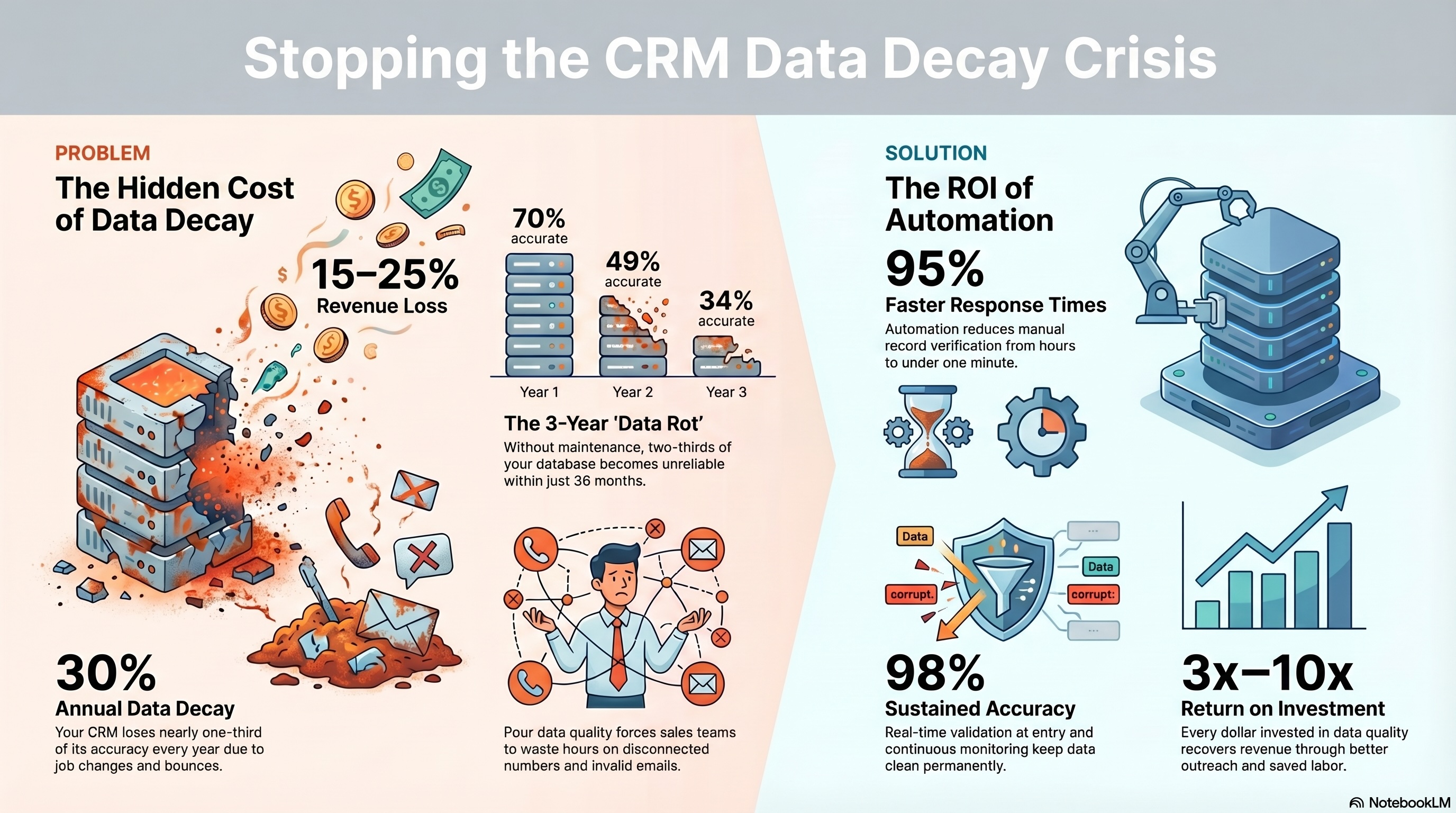
If you're like most businesses, the answer is uncomfortable. Studies show that CRM data degrades at 30% per year—people change jobs, emails bounce, phone numbers disconnect, companies merge. Within three years, nearly every record in your database could have at least one inaccuracy.
The cost isn't just theoretical. Dirty data means emails landing in dead inboxes, sales calls to wrong numbers, duplicate records creating confusion, and marketing campaigns burning budget on invalid contacts.
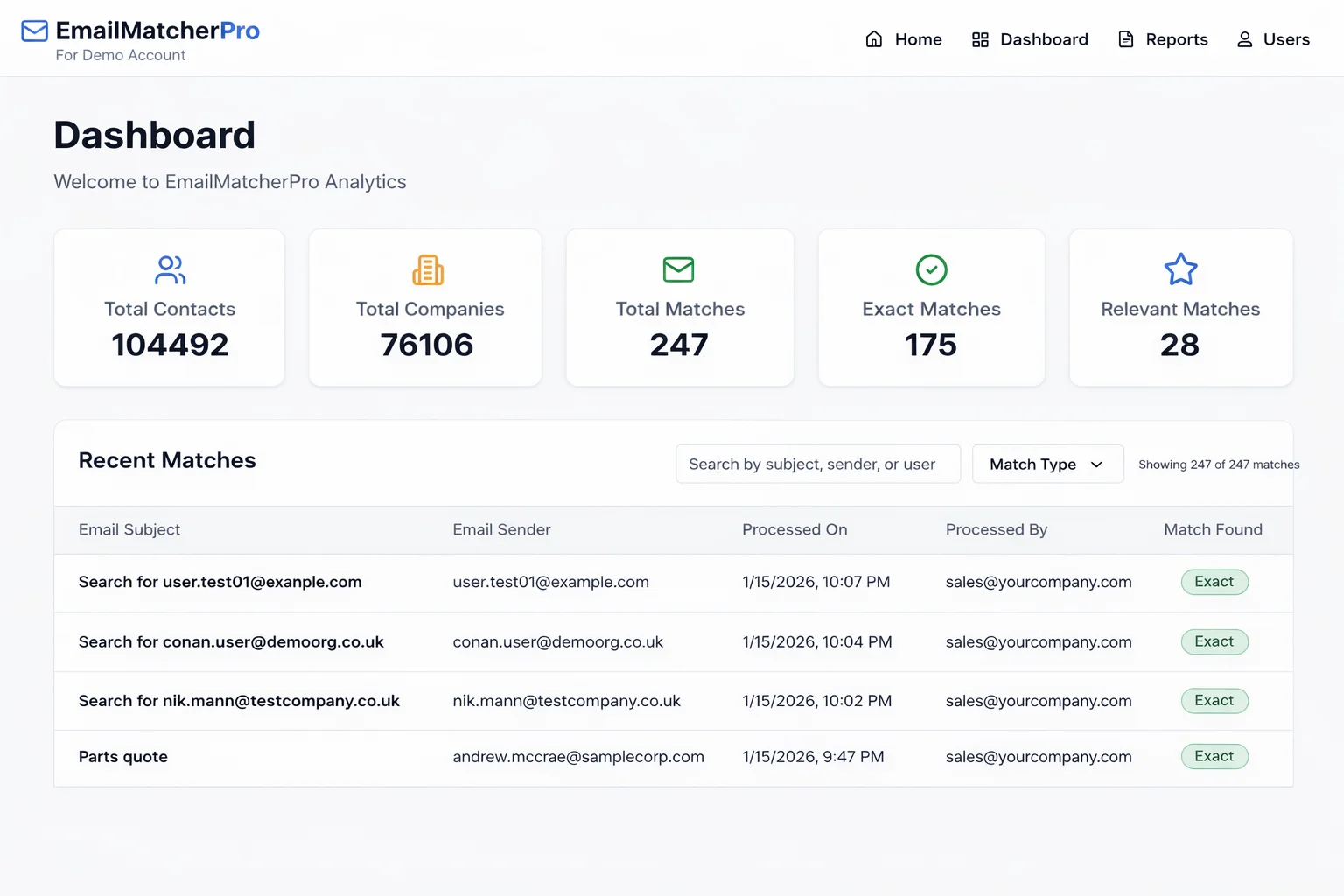
A large engineering firm was drowning in this exact problem—200,000+ records with no reliable way to verify which were current. Their automated CRM Data Matching & Email Verification System achieved 95% faster response times and transformed their data from a liability into a strategic asset. This guide shows you how.
🗑️ The True Cost of Dirty Data (It's Worse Than You Think)
Dirty data doesn't announce itself. It silently erodes your business in ways that compound over time.
Direct Costs:
- Marketing emails sent to invalid addresses: wasted spend + damaged sender reputation
- Sales team calling disconnected numbers: 3-5 hours/week wasted per rep
- Duplicate records: same customer contacted multiple times (or never)
- Incorrect invoicing: payment delays and customer frustration
Indirect Costs:
- Bad data leads to bad decisions ("we have 10,000 leads!" — no, you have 6,000 valid ones)
- Customer trust eroded by wrong names, outdated information, irrelevant outreach
- Regulatory risk with incorrect consent records
Industry Benchmarks:
- Gartner estimates poor data quality costs organizations an average of $12.9 million annually
- For small businesses, that translates to 15-25% of revenue lost to data-driven inefficiency
Warning Sign: If your email bounce rate exceeds 5%, your call-not-connected rate is above 20%, or your team regularly finds duplicate contacts, you have a data quality crisis.
🔍 How Data Degrades: The 30% Annual Decay Problem
Your data starts rotting the moment it enters your CRM.
What changes every year:
- 30% of email addresses become invalid (job changes, domain changes, abandoned accounts)
- 20% of phone numbers disconnect or change
- 18% of postal addresses become outdated
- 25% of job titles change
- 15% of companies merge, rebrand, or close
The Compounding Effect:
- Year 1: 70% of your data is accurate
- Year 2: 49% accurate
- Year 3: 34% accurate
After three years without maintenance, two-thirds of your CRM is unreliable.
A large engineering firm experienced this firsthand with their 200,000+ record database. Contact information that was accurate when entered had degraded to the point where responding to customer inquiries required manual verification that took hours.
The Result? Staff were spending more time verifying data than actually helping customers—a complete inversion of priorities.
⚡ Automated Data Matching: How an Engineering Firm Solved It
A large engineering firm needed to verify contact information across their massive database—quickly and accurately.
The Challenge:
- 200,000+ records across multiple systems
- No consistent format (some entries had full names, others had initials)
- Duplicate records with slightly different information
- Email addresses with no verification history
- Response times suffering because staff manually searched for correct details
The Solution: A custom CRM Data Matching & Email Verification System that:
- Fuzzy matching identifies likely duplicates even with typos and format differences
- Email verification checks deliverability in real-time without sending test emails
- Automated deduplication merges records intelligently, keeping the most recent information
- Confidence scoring rates each record's reliability so teams know what to trust
The Numbers:
- Response times improved by 95% (from hours of manual searching to under 1 minute)
- Data accuracy reached reliable, verified status across the database
- Staff time freed from data verification to actual customer service
Warning Sign: If your team's response to a customer inquiry starts with "let me find the right record," your data is actively hurting your customer experience.
📊 Beyond Verification: Building a Data Quality Engine
One-time data cleaning is a band-aid. What you need is a system that keeps data clean automatically.
Dinamiq's Approach to Ongoing Data Quality:
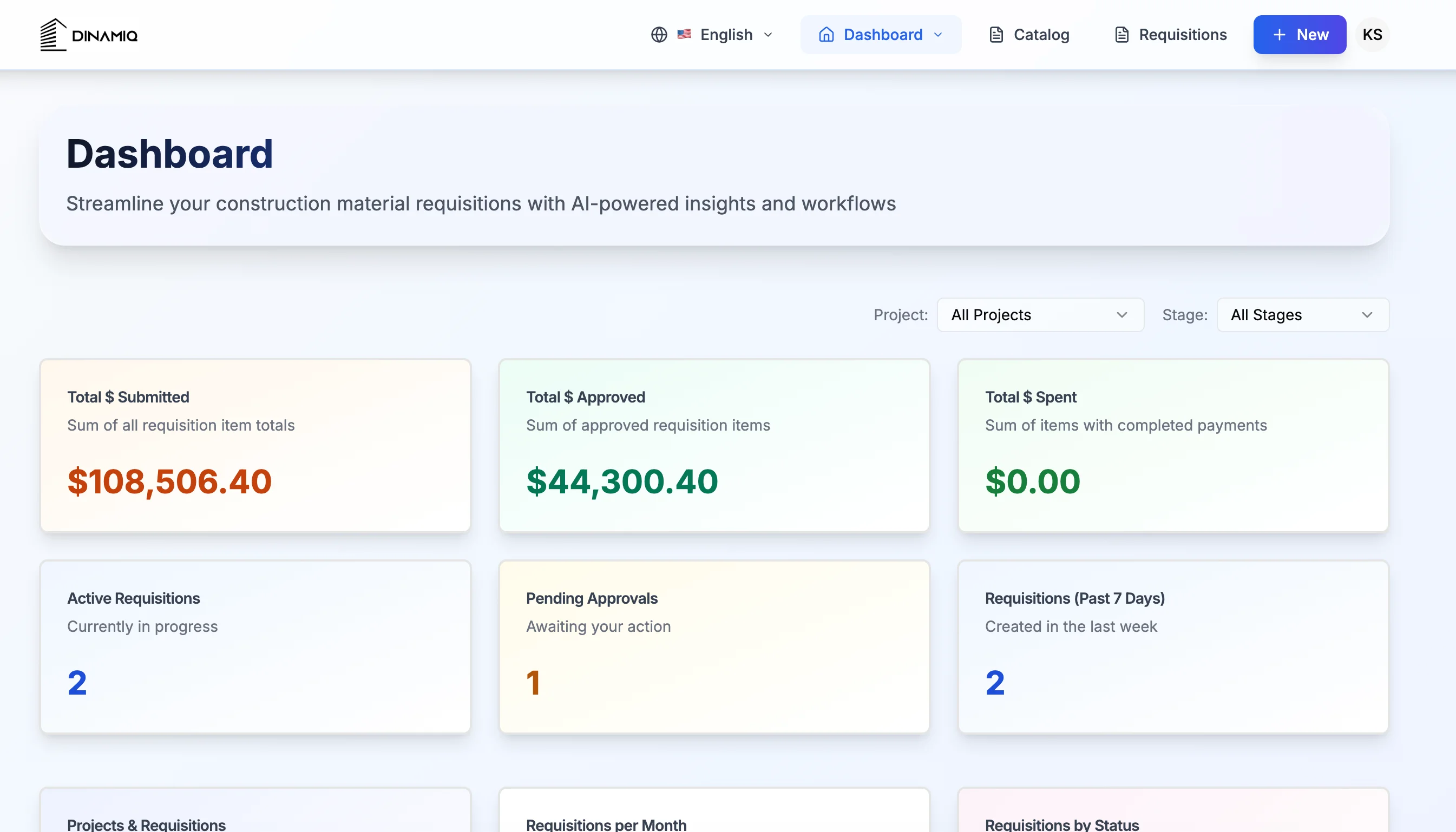
Dinamiq implemented an automated data management system that achieved 98% data accuracy—not as a one-off cleanup, but as a sustained standard.
The Four Pillars of Automated Data Quality:
1. Validation at Entry Catch errors before they enter your system. Real-time email verification, phone format checking, and address validation at the point of data capture prevents 60-70% of data quality issues.
2. Continuous Monitoring Scheduled verification runs check existing records against current data. Flagged records get updated or marked for review automatically.
3. Smart Deduplication Fuzzy matching algorithms detect when "John Smith" at "j.smith@company.com" and "J. Smith" at "john.smith@company.com" are the same person—then merge them intelligently.
4. Enrichment Automate the addition of missing data: company size, industry, social profiles. Complete records convert better because your team has full context before every interaction.
The Result? A CRM that gets more accurate over time rather than less—turning your database into a genuine competitive advantage.
🛠️ Practical Implementation: Where to Start
You don't need to overhaul everything at once. Start with the highest-impact data quality issue.
Step 1: Audit Your Current State (Week 1) Run a basic health check on your CRM:
- What percentage of emails bounce when you send a campaign?
- How many duplicate records exist?
- When was the last time records were verified?
- How long does it take staff to find correct customer information?
Step 2: Fix the Biggest Problem First (Weeks 2-3) Usually one of these:
- High bounce rates → Implement email verification
- Many duplicates → Run deduplication with fuzzy matching
- Slow lookups → Build search and matching automation
- Stale records → Set up scheduled verification runs
Step 3: Prevent Future Decay (Week 4) Implement validation at the point of entry:
- Real-time email verification on all forms
- Phone number format validation
- Duplicate detection before new records are created
- Scheduled monthly verification runs
Timeline: Most businesses can go from data chaos to a functioning quality engine in 4-6 weeks.
💰 The ROI of Clean Data: What Changes When Your CRM Actually Works
Clean data doesn't just prevent losses—it actively generates revenue.
Marketing Impact:
- Email deliverability improves from 85% to 98%+ → More eyes on campaigns
- Segmentation accuracy improves → Higher engagement rates
- Reduced wasted spend on invalid contacts → Better cost per acquisition
Sales Impact:
- Reps spend time selling instead of searching for correct information
- Fewer embarrassing wrong-name or outdated-info calls
- Better lead scoring because data is trustworthy
Operational Impact:
- Engineering firm: 95% faster response times (hours → under 1 minute)
- Dinamiq: 98% data accuracy sustained over time
- Staff hours redirected from data maintenance to revenue-generating activities
Typical ROI Calculation:
- Data cleanup + automation investment: $5,000-15,000
- Annual savings from reduced manual verification: $15,000-30,000
- Revenue recovered from better outreach: $20,000-50,000
- ROI achieved in: 3-6 months
The Result? Every dollar invested in data quality returns $3-10 in recovered revenue and saved labor. It's one of the highest-ROI automation investments a business can make.
💡 See These Strategies in Action
Real businesses, real results. Explore how companies implemented these concepts:
Key Takeaways
Quick wins and actionable insights from this guide:
- CRM data degrades at 30% per year—after 3 years, two-thirds of your records are unreliable
- Dirty data costs small businesses 15-25% of revenue through wasted outreach and lost opportunities
- An engineering firm achieved 95% faster response times with automated data matching across 200K+ records
- Dinamiq sustains 98% data accuracy through continuous automated verification
- Start with your biggest pain point: bounce rates, duplicates, slow lookups, or stale records
- Data quality automation typically achieves ROI in 3-6 months with $3-10 return per dollar invested
AI 101 Services Team
Data Automation Specialists
AI 101 Services helps service businesses implement AI automation solutions that deliver measurable ROI. With 21+ solutions delivered and 15+ clients served, we specialize in turning manual chaos into streamlined digital workflows.